


10L Rigid Flex Board
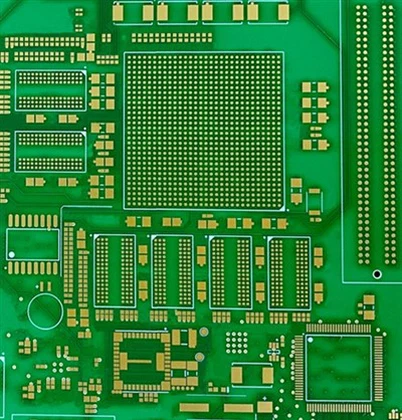
The 10L rigid-flex board is a high-end PCB. Its manufacturing demands high precision and strict control.
Description
The 10-layer rigid-flex PCB is a high-end printed circuit board (PCB) focusing on multi-layer interconnection and three-dimensional assembly requirements. Its core advantage lies in the integrated compounding of 10 layers of rigid and flexible substrates, balancing structural support and bending adaptability. Its multi-layer stack structure and rigid-flex transition process have extremely high requirements for manufacturing precision. During the production process, special attention must be paid to the following aspects.
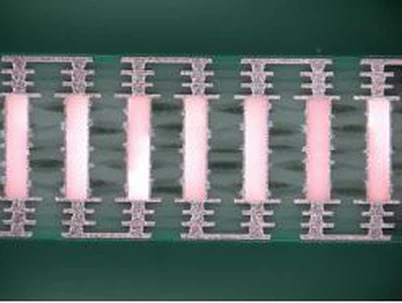
First, it is necessary to accurately select substrates according to the requirements of the 10-layer stack structure. The rigid layers preferably adopt FR-4 copper-clad laminates with stable temperature resistance and dielectric properties, while the flexible layers use polyimide (PI) substrates with excellent bending resistance and anti-aging performance. Meanwhile, high-performance adhesives compatible with both are used to ensure interlayer bonding strength and electrical compatibility, eliminating the risk of multi-layer delamination from the source. Secondly, focus on controlling the alignment precision of the 10-layer stack and the process of the rigid-flex transition area. During lamination, the position of circuits in each layer must be accurately calibrated. For the rigid-flex transition area, optimize lamination parameters and edge treatment to avoid circuit breakage caused by stress concentration during bending. Finally, strengthen full-process quality control. For key processes of 10-layer boards such as drilling, etching, and solder masking, strictly monitor hole diameter precision, circuit integrity, and interlayer conductivity. Each batch of products undergoes rigorous testing to ensure compliance with industry standards.
This 10-layer rigid-flex PCB has numerous advantages, providing multiple supports for the design and production of electronic products.
The 10-layer structure provides sufficient space for high-density wiring, enabling more functional circuits to be arranged on a limited board surface, realizing independent transmission and efficient interconnection of multi-module signals. Meanwhile, through reasonable interlayer shielding design, it effectively reduces signal crosstalk between different circuits, ensures transmission stability of equipment under high-frequency working conditions, and significantly improves the operational reliability of end products.
Through the reasonable matching of rigid and flexible substrates, the hardness, flexibility, and thermal expansion coefficient of the board can be flexibly adjusted, making the product suitable for different installation scenarios and working conditions, with excellent mechanical properties and environmental adaptability. Currently, it is widely used in various high-end electronic products such as foldable smartphones, wearable devices, automotive cameras, and medical instruments.
Compared with traditional single-layer, double-layer rigid-flex PCBs and single rigid boards, the 10-layer rigid-flex PCB has prominent advantages. First, the multi-layer structure greatly improves integration density, enabling it to carry more functional modules within the same size, reducing the usage of external cables and connectors, and facilitating the upgrading of electronic products towards thinner, smaller, and more integrated designs. Second, the 10-layer stack structure supports more reasonable signal layer division and layout. Power layers, signal layers, and ground layers can be independently planned, which not only reduces signal attenuation but also enhances anti-interference capability, meeting the complex signal transmission requirements of high-end electronic equipment.
Meanwhile, relying on excellent structural stability and durability, the 10-layer rigid-flex PCB can work stably in complex assembly processes and service environments, effectively improving the quality and service life of end electronic products. Therefore, it is widely used in multiple fields such as consumer electronics, automotive electronics, industrial control, and medical equipment.
In general, the production of 10-layer rigid-flex PCBs mainly focuses on overcoming three core challenges: multi-layer stack alignment, rigid-flex substrate compatibility, and transition area process optimization. It requires mature multi-layer PCB manufacturing technology and rich rigid-flex production experience to meet strict industry standards. Only by strictly following manufacturing specifications and full-process quality control can high-quality and high-reliability 10-layer rigid-flex PCBs be produced.
Sihui FuJi is a professional electronic manufacturer with nearly 16 years of production experience. Equipped with advanced equipment and scientific management, our production lines now have the capacity for mass production of 10-layer and above rigid-flex PCBs. If you have relevant product needs, please feel free to contact us.
The specification of sample board
Item: 10-layer rigid-flex board
Material: S1000-2M+IF-2LD5018NJ2(flexible printed circuit board)
Board thickness:1.25±0.15mm(rigid circuit board position)
0.16±0.05mm(flexible printed circuit board position)
Hot Tags: 10l rigid flex board, China 10l rigid flex board manufacturers, suppliers, factory, 0 3mm thin pcb, 0.4mm Thin Circuit Board, 1layer Flexible Printed Circuit Board, 2 layer flexible pcb, 6L Rigid Flex circuit board, 8L Rigid Flex circuit board
Send Inquiry
You Might Also Like