


What Is Rigid Circuit Board?
A rigid circuit board (PCB) is a type of printed circuit board that has a rigid base layer that cannot bend. Rigid PCBs are made from ceramic or glass materials and are durable, able to withstand high heat, and resistant to prolonged exposure to the elements. They are often used in devices that require rigidity, such as computers and printers, and are well suited for high-use areas.
Why Choose Us
Professional Team
A security service provider trusted by customers, it serves customers in many industries such as government and enterprises, finance, medical care, Internet, e-commerce and so on.
Technical Support
Our team of experts is available to assist with troubleshooting, answer technical inquiries, and provide guidance.
Reliable Supply
We offer a vertically integrated supply chain model to ensure reliable long-term supply and complete traceability.
Customer Service
We prioritize open communication to address our clients' specific requirements and deliver personalized solutions.


Durability and Reliability
Rigid PCBs are made from hard, sturdy materials like fiberglass or epoxy resin, which provide a solid foundation for the components. This structural strength ensures that the boards can withstand physical stresses and are less prone to damage during handling, manufacturing, and operation.
Ease of Fabrication and Assembly
The rigidity of these boards makes them easier to handle during the assembly process. Components can be easily soldered onto the board, and the risk of damaging the board during assembly is lower compared to flexible PCBs.
High Component Density
Rigid PCBs can support a high density of components and circuitry. This is especially beneficial in applications where space is a premium, such as in smartphones and other compact electronic devices.
Thermal Stability
Rigid PCBs typically exhibit good thermal stability, meaning they can withstand high temperatures without deforming. This is crucial for high-power applications and environments where the PCB is exposed to significant heat.
Cost-Effectiveness
For mass production, rigid PCBs are generally more cost-effective compared to flexible or rigid-flex PCBs. The standardization of materials and manufacturing processes makes them more affordable for large-scale production.
Consistent Quality
Due to their well-established manufacturing processes, rigid PCBs tend to have consistent quality and performance. This predictability is essential in industries where reliability is critical, such as in medical devices or aerospace applications.
High-Speed Circuitry Compatibility
Rigid PCBs are capable of supporting high-speed circuitry. They provide a stable platform for high-frequency circuits, which is essential in telecommunications and computing.
Environmental Resistance
Many rigid PCBs are designed to withstand harsh environmental conditions, including exposure to chemicals, moisture, and extreme temperatures. This makes them suitable for use in outdoor and industrial applications.
Uses of Rigid Circuit Board
Rigid Printed Circuit Boards enhance circuit density, leading to a reduction in both size and weight of the board. The applications of rigid PCBs are as diverse as the electronics landscape itself. Here are just a few examples:
Computing: From desktop PCs to laptops and smartphones, rigid PCBs form the backbone of these devices, connecting processors, memory, and other crucial components.
Consumer Electronics: Televisions, cameras, game consoles, and more all rely on rigid PCBs for their internal circuitry.
Industrial Applications: Power supplies, motor controllers, and various industrial equipment utilize rigid PCBs for their robust performance and heat management.
Medical Devices: Pacemakers, defibrillators, and other critical medical equipment depend on the reliability and precision of rigid PCBs.
Aerospace and Defense: Satellites, aircraft electronics, and military equipment often require the ruggedness and stability of rigid PCBs.
Types of Rigid Circuit Board
One of the advantages of rigid PCBs is their ability to work be used for various project specifications and configurations. At MCL, we offer rigid PCBs in a range of types, including:
Single-sided: Single-sided circuit boards are the original PCB. They have a single layer of conductive material, and all components are located on one side of the board. With their simple design, single-sided PCBs are fast and easy to manufacture, reducing the possibility of mistakes. This cost-effective configuration thrives in low-density designs.
Double-sided: Rather than a single conductive layer, double-sided PCBs utilize copper conductive layers on both sides. With twice the space for components, double-sided PCBs have more design options and increased circuit complexity, making them applicable for a wide range of projects.
Multilayer: This type of PCB uses three or more layers of conductive material stacked in the middle with several other layers surrounding the core. With numerous layers and an advanced curing process, multilayer boards reduce the need for interconnection wiring, save space and result in a dense and tough PCB.
Carrier board or Mechanical Spacer: When you need a rigid backer to provide support during the assembly process for very thin PCBs, some companies may opt to use a carrier board that has no conductive layers. Any circuit board that is used for mechanical operations does have any copper layers or require any electrical connections. At MCL, we can create a bare rigid PCB according to your exact specifications to support all components and equipment you intend to work with.
How Are Rigid PCB Boards Manufactured?


What are PCBs made of?
Rigid PCB comprises different layers that are joined together using adhesive and heat, providing a solid shape to board material. Following layers are used to develop a rigid PCB.
Substrate Layer
The substrate layer, also referred base material, is made of fiberglass. The FR4 is mainly used as a substrate material, the most common fiberglass that provides rigidity and stiffness to the board. Phenolics and epoxies are also used as a base material, but they are not as good as FR4. However, they are less expensive and feature a unique lousy smell. The decomposition temperature of phenolics is too low, resulting in delamination of the layer if solder is placed for a long time.
Copper Layer
On the top of the substrate layer, a copper foil is laminated on the board with the help of the added amount of heat and adhesive. In everyday use, both sides of the board are laminated with copper; however, some cheap electronics come with only one layer of copper material on the board. Different boards come with different thicknesses, which are described in ounces per square foot.
Solder Mask Layer
Solder Mask Layer houses above the copper layer. This layer is added on the board to add insulation on the copper layer to avoid any damage if any conduction material is touched with the copper layer.
Silkscreen Layer
The silkscreen layer is located above the solder mask layer. It is used to add characters or symbols on the board to understand the board better. White color is mainly used for silkscreen. However, other colors are also available, including grey, red, black, and yellow.
How Are Rigid Pcbs and Flex Circuits Different?
A rigid PCB, usually known simply as a PCB, is what most people think of when they imagine a circuit board. These boards connect electrical components using conductive tracks and other elements, which are arranged on a non-conductive substrate. In a rigid circuit board, the non-conductive substrate usually contains glass, which reinforces the board and gives it strength and rigidity. A rigid circuit board provides great support for components, as well as decent thermal resistance.
Though a flexible PCB also features conductive tracks on a non-conductive substrate, this type of circuit board uses a flexible base material like polyimide. The flexible base allows flexible circuits to withstand vibration, dissipate heat and fold up into various shapes. Because of their structural give, flex circuits are increasingly used in compact and innovative electronics.
Besides base layer material and rigidity, notable differences between PCBs and flex circuits include:
Conductive material: Because flex circuits have to bend, manufacturers may use more flexible rolled annealed copper instead of electro-deposited copper as a conductive material.
Manufacturing process: Instead of using a solder mask, flexible PCB manufacturers use a process called overlay or coverlay to protect a flexible PCB's exposed circuitry.
Typical cost: Flex circuits typically cost more than rigid circuit boards. However, because of their ability to fit in compact spaces, flex circuits allow engineers to shrink the size of their products, leading to indirect savings.
How to choose between a rigid and flexible pcb
Rigid and flexible circuit boards find use in many different products, though some applications may benefit more from one type of circuit board. For example, rigid PCBs make sense in larger products, such as televisions and desktop computers, while flexible circuits are required for more compact products, such as smartphones and wearable technology.
Pcb in Harsh Environment: Which Precautions Shall Be Taken?
Some categories of electronic devices must operate in particularly severe conditions, such as salt spray, salt, dust, sand, or extreme temperatures. To ensure that the electronic circuit continues to operate as in normal conditions, the PCB must be designed to withstand these events without being damaged. The PCBs used in the automotive, industrial or aerospace sectors, for example, are continuously subjected to vibrations, mechanical stresses, shocks, very wide thermal excursions and more.
The main challenges facing PCBs for harsh environments can be summarized as follows:
Moisture, dust and dirt: To counteract these environmental factors, it is often necessary to treat the PCB with a special process known as conformal coating. With it, the PCB is covered after the assembly process with a thin layer of non-conductive protective material such as silicon, acrylic, urethane or p-xylene. The coating allows to extend the life of the electronic circuit by protecting it from external contaminants.
High temperatures: If the PCB has to operate continuously at temperatures above the standard, it is better to use layers with a thicker copper (heavy copper). Copper thicknesses greater than 3 ounces per square foot are typically combined with the application of the compliant coating to provide the board with a high level of protection in the event of uninterrupted operation at high temperatures. The use of layers with a higher glass transition temperature (Tg), such as FR-4 TG140 or TG170), provides the PCB with additional protection from temperature
Ionizing radiation: PCBs for aerospace applications are bombarded with particles of various types, in addition to electromagnetic radiation generated by the sun and other celestial bodies. This radiation can cause temporary disturbances (such as bit flip or memory deletion) or permanent component damage shocks and vibrations, especially in automotive and aerospace applications.
Corrosion: It is one of the main pitfalls for any metal part. Corrosion occurs when oxygen and metal bond to each other via a process known as oxidation. This produces rust and causes the metal to lose its chemical properties, decomposing over time. Since PCBs contain a high amount of metal, if exposed to oxygen they are subject to corrosion.
To prevent damage caused by atmospheric agents, a non-conductive protective coating known as conformal coating is applied to the PCB after assembly (Figure 1). This is commonly applied to PCBs for consumer, appliance and mobile devices, where it is common to operate in the presence of moisture, dust or other harsh environmental factors. The protective layer applied to the PCB allows the moisture present in the PCB layers to flow outwards, while preventing external agents from reaching the board and its components, compromising their operation. In addition to increasing reliability, the conformal coating extends the life of the circuit.
The most common types of conformal coating are silicone, acrylic resin, polyurethane and p-xylene, each capable of providing a certain level of protection. Silicone, for example, can cover the widest range of temperatures and is therefore the best choice for applications with extreme temperatures. On the other hand, silicone has poor adhesive power on some types of substrate and lower chemical resistance than acrylic resin. The latter, due to its rigid structure, is not particularly suitable in the presence of shocks and vibrations. Polyurethanes offer high resistance to humidity, abrasion and vibrations, withstand low temperatures well but not high temperatures. It follows that they are mainly used in applications with temperatures from -40°C to +120°C. P-xylene is a consistent material that offers high protection but is expensive and being sensitive to contaminants must be applied in a vacuum.
Regarding the application of the PCB conformal coating, four techniques can be used: dipping, automated selective coating, spraying and brushing. Each of these alternatives achieves the same goal: to completely cover the PCB including the sharp edges and all edges of the board. After application, the conformal coating is cured by air drying, oven drying or by UV light.
The increasing density of the components on the PCB leads to an inevitable increase in operating temperatures, a condition that in the long run can compromise the integrity of the welds or of the layers themselves due to the expansion and contraction of materials with different physical properties. A high temperature PCB should therefore use a dielectric with a glass transition temperature (Tg) of at least 170°C. A rule normally applied is to allow operating temperatures up to about 25°C lower than the Tg value of the material used. In addition to the choice of material, the high temperature of the PCB can be managed by removing the heat produced and transferring it to other areas of the PCB. If the hot component is mounted on the top side of the PCB and has a sufficiently large surface, a heat sink can be installed on it that can remove the heat first by conduction (from the component to the heatsink) and then by convection (from the surfaces of the heatsink to the surrounding, colder air).
If the hot component is mounted on the underside of the PCB and it is not possible to mount a heat sink, the technique typically used by designers is to insert a large number of thermal paths on the PCB to transfer heat away from the hot component to a layer. of copper on the top of the PCB, from where it can be further transferred to a suitable heat sink. Typically, PCB mounted heat sinks are large, with finned or corrugated surfaces to increase the dissipation area. Fans can be added to improve forced convection cooling, compared to natural convection cooling.
For long-term space missions, the only option available is to use "rad-hard" components. These components are much rarer and consequently more expensive than standard components. For short-term space missions (up to one year), the use of standard commercial components may be allowed, subject to analysis and verification of their ability to withstand radiation. This allows you to reduce the design costs of space equipment and expand the selection of components available for design. By applying different hardware design techniques, the effects produced by radiation can be countered. At the PCB design level, for example, it is important to ensure adequate grounding of all metal parts.
To provide protection against shock and vibration, the PCB can be installed in a container into which resin is poured to fully encapsulate it. The higher the resin layer, the better the degree of protection. Unless all components on the PCB have a uniform height, the thickness of the resin layer will however vary across the board, providing slightly different levels of protection for each component. The thinnest resin layer therefore corresponds, in the worst case, to the level of protection offered on the entire board. Before even considering resin encapsulation, the PCB must be thoroughly cleaned. Surface contamination can negatively impact the levels of protection offered by encapsulation, particularly in cases of chemical resistance (as it provides an easier path for chemicals to enter).
Our Factory
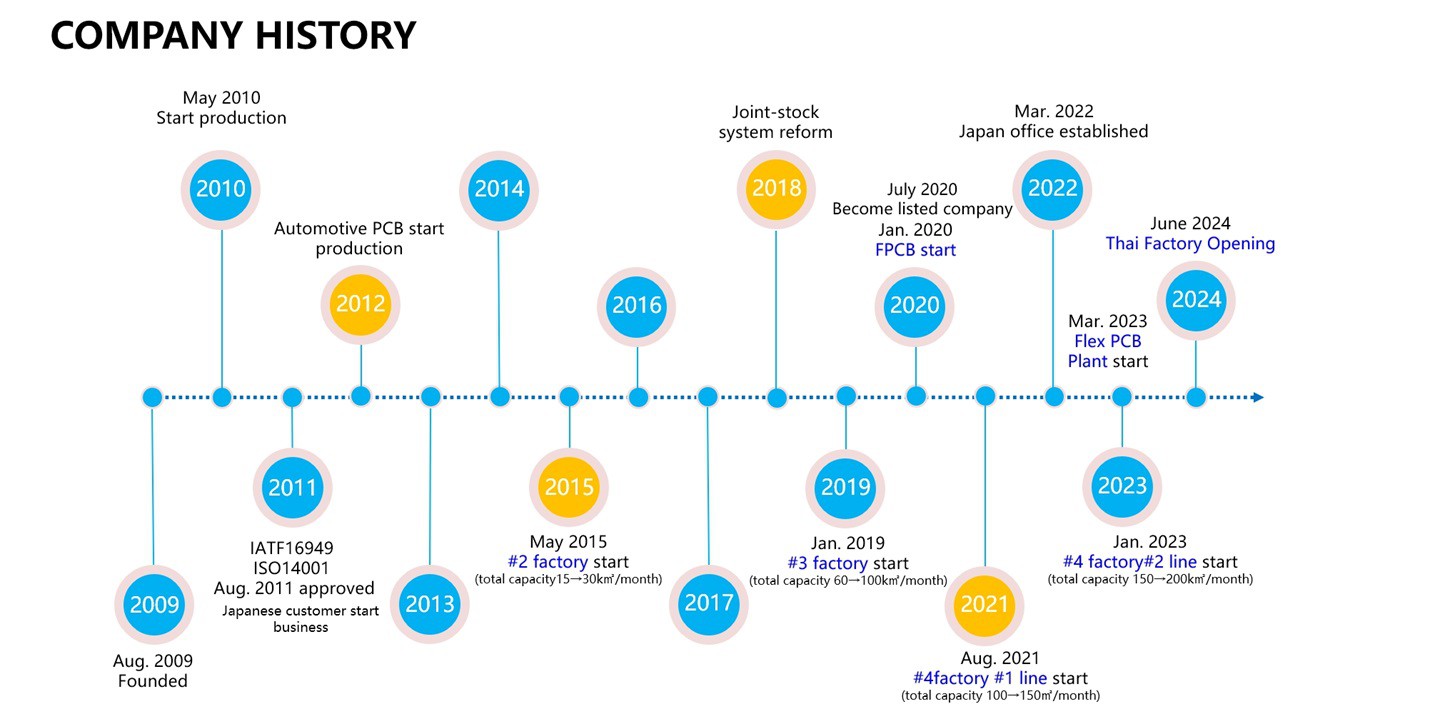
Sihui Fuji Electronics Technology Co., Ltd. Founded in 2009, it has been focusing on long-term and reliable circuit board production for 14 years. With the production strength of allegro proofing, mass production, multiple product names, various batches, and short delivery time, it provides one-stop comprehensive services to meet the needs of customers to the greatest extent. It is a chinese electronic circuit board manufacturer with rich experience in quality management of japanese companies. Business.

FAQ
As one of the leading high density pcb manufacturers and suppliers in China, we warmly welcome you to buy or wholesale bulk high density pcb for sale here from our factory. All customized products are with high quality and competitive price. Contact us for quotation and free sample.
2 Stage HDI High Density Board, 2 Stage HDI High density pcb, High Density Board in LED Light