


Silk screen process printing
Leave a message
Silk screen process printing is a common circuit making technology, which is used to make circuits on thin substrates. Screen printing is achieved by transferring the circuit shape to the copper foil through the etching process, rather than through mechanical cutting. Screen printing production is the use of electrochemical etching (photolithography) technology to create patterns on chemically etched copper plates for the production of printed circuit boards.
Screen printing has the characteristics of low cost, simple operation, high production efficiency, and a variety of printing materials, and is widely used in the manufacturing of printed circuit boards and film thickness integrated circuits. Currently, various types of screen printing materials are widely used in the production of printed circuit boards, making the surface of printed circuit boards covered with polymer with certain characteristics, greatly adapting to the rapid development of electronic products towards higher precision, higher density, higher reliability, and micro porous technology. At the same time, higher requirements are put forward for the development and production of printed circuit boards.
The production of silk screen printing mainly includes three steps: design, plate making, and printing. In the design phase, it is necessary to first determine the content, size, and position of printing based on the size and layout of the printed circuit board. Usually, the printed content on a printed circuit board includes information such as the name, number, polarity, value, and production date of the components. In the process of plate making, it is necessary to use a screen printing template with high clarity and accuracy according to the design content and requirements. Then, establish the alignment relationship between the screen and the printed circuit board and print it, usually using screen printing technology. After multiple processes such as printing, curing, and testing, the board finally forms clear and wear-resistant printed characters.
During the printing process, manufacturers must also use special ink types to ensure ink adhesion and durability on the surface of the printed circuit board. This type of ink is usually a coating called Steel UV Curable Ink, which can be cured through UV exposure. This process ensures that the ink can remain clear and accurate during long-term use.
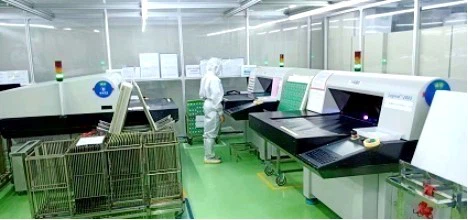
Picture:Ink jet printer
In addition, data coordination is also required during the text printing process to ensure that each element on the printed circuit board carries the correct reference label. This step is usually completed by computer-aided design (CAD) software, which can directly read component information from the circuit pattern and then add component names and values to the printed circuit board.
The control points in text printing mainly include printing quality, printing error, and printing accuracy. Printing quality refers to the comprehensive indicators of clarity, thickness, hierarchy, and contrast of printed text, graphics, and symbols. Printing error refers to problems that affect quality such as printing position deviation, printing size error, and printing content error. Printing precision refers to the comprehensive influence of screen making, printing machine, printed circuit board, printing ink and other links, which directly affects the reliability and service life of printed circuit board.


