
The process of profiling
Leave a message
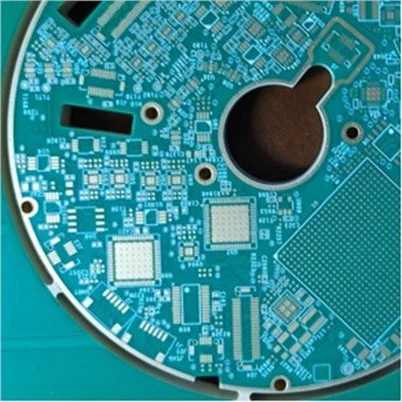
Printed circuit board is the most commonly used basic component in electronic components, which is used to fix and connect various electronic components, complete the transmission and control of electrical signals. The processing of the appearance of a circuit board is the process of processing a printed circuit board of working size into a board of customer required size, so that the pcb can better adapt to the size requirements of various external devices.
1.The purpose of profiling process
On a finished printed circuit board, process and produce the board according to the customer's required size. At the same time, it is necessary to ensure the quality of the board during the processing process to avoid errors and defects, in order to ensure the stability and reliability of the printed circuit board.
2.The principle of profiling board
There is a CNC computer system that controls the movement of the machine and produces the shape required by the customer based on the input data of the computer. In terms of control, there are X-axis, Y-axis, and Z-axis coordinates. The computer controls the movement of the XY axis of the machine and the gongs driven by the Z-axis gongs. By inputting gongs and appropriate parameters, the machine will automatically create the desired shape according to the data.
3.Precautions for processing operations
①During the process, it is necessary to strictly comply with relevant production specifications and standards, and set and adjust according to different processing requirements
②Operators need to receive sufficient training and technical learning, master processing skills and operating methods, and regularly carry out equipment maintenance.
③During the process, it is necessary to conduct full inspection and quality control, promptly detect and handle defective products, and thoroughly rectify and improve the products.
The profiling processing of printed circuit boards is an important link in ensuring product quality and yield, and has significant significance and value. In the process, scientific, standardized, and meticulous operation and management are required to achieve three aspects of work: "reducing errors, preventing errors, and improving quality", in order to achieve better results and benefits.
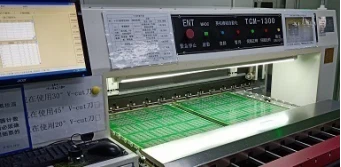
Picture:V-Cut

Picture:Routing

Picture:Punching
The difference between V-cut and router
V-cut is to cut a V-shaped straight shallow groove on both sides of the printed circuit board where it needs to be divided. The so-called 'V-cut' is a type of dividing line made by a printed circuit board (PCB) manufacturer according to the customer's drawing requirements, using a rotary cutter to cut specific positions on the PCB in advance. Its purpose is to facilitate the subsequent 'De panel' of SMT printed circuit boards after assembly. Because the cut appearance looks like an English 'V' shape, people call it V-cut.
Advantages: The required equipment is simple, fast, and cost-effective.
Disadvantages: Only square panels can be processed, and multiple panels cannot be processed simultaneously. There are strict accuracy requirements for the depth of the V-groove, and the dimensional accuracy of the V-cut panel is low. The connection interface is rough after splicing and splitting.
Routing is the process of using a CNC machine to create a predetermined pattern on a printed circuit board using a milling cutter according to a pre programmed program.
Advantages: Various shapes of panel shapes can be created on the board according to the program, and several boards can be overlapped and processed simultaneously. The forming size accuracy of the panel is high, and the interface of the panel is smooth.