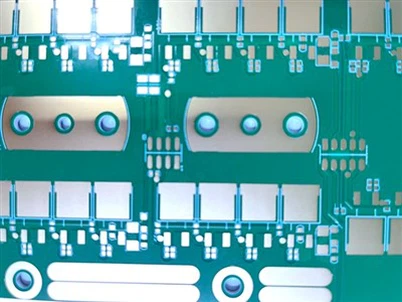


Cold-Thermal Shock Test of PCB
Leave a message
The cold-thermal shock test is to simulate various temperature changes encountered by the printed circuit board in the actual use scenario by alternating cold and hot within a certain temperature range to test the heat resistance and cold resistance of the board. This experiment can detect whether the printed circuit board will fuse, open circuit, desoldering and other problems in the process of thermal expansion, so as to evaluate the reliability of the printed circuit board.
Principle
The expansion coefficient of printed circuit boards varies in high and low temperature environments, which can lead to loosening or cracking of the printed circuit board, resulting in abnormal circuit connections. The cold and hot shock test is to repeatedly change the pcb between high temperature and low temperature to simulate the extreme conditions in the real environment and test whether it can work normally.
Experimental operation requirements
The operation of cold and thermal shock test has certain requirements. Firstly, it is necessary to control the temperature range and duration of the experiment, and perform several cold and hot alternations within a certain temperature range. At the same time, attention should also be paid to the surface condition of the printed circuit board. If possible, auxiliary reagents for accelerating oxidation experiments can be added. Based on the experimental results, the quality of the pcb can be evaluated and optimized.

Picture:Cold-thermal machine
The experiment is usually divided into two steps, namely low-temperature shock and high-temperature shock. In the low temperature impact step, the printed circuit board is placed in an extremely low temperature environment and rapidly heated to high temperature within a few minutes to simulate thermal expansion caused by extreme environmental changes and rapid temperature changes. In the high-temperature shock step, the circuit board is placed in a high-temperature environment and rapidly cooled to a low temperature within a few minutes to simulate thermal expansion and contraction at high temperatures and evaluate the resistance of the printed circuit board.
It is worth noting that the cold and thermal shock test does not fully represent the actual use of PCB in the environment. Because in practical use, circuit boards may also encounter other forms of physical, chemical, and biological environmental factors. Therefore, when evaluating the reliability of circuit boards, it is necessary to integrate multiple experimental results and make comprehensive judgments based on actual usage experience.
The cold-thermal shock test has a significant impact on the quality of PCB. First, this experiment can help to evaluate the stability and quality of the printed circuit board, so as to ensure that it can work in different temperature environments, and enhance its ability to resist aging and environmental changes. Secondly, the experiment can also find out whether there are physical change such as crack on the pcb caused by temperature changes, so as to avoid product failure and quality problems caused thereby. Finally, the experiment can enhance the understanding of thermal expansion performance of PCB, and provide reference and optimization suggestions for product design and manufacturing.