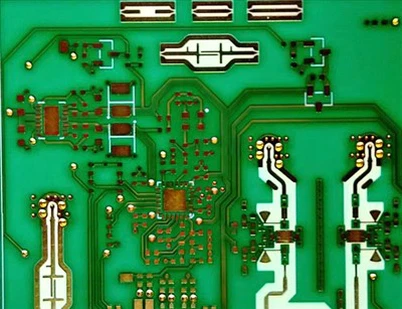


Protection Board Overcharge Protection Control Principle
Leave a message
When the battery is normally charged by the charger, as the charging time increases, the voltage of the cell will become higher and higher. When the voltage of the cell rises to 4.4V, the DW01 will consider that the voltage of the cell has been in the state of overcharge voltage. The output voltage of the 3rd pin is immediately disconnected, so that the 3rd pin voltage becomes 0V, and the switch tube in the 8205A is turned off because the 4th pin has no voltage. At this time, the B- of the battery cell and the P- of the protection board are in a disconnected state. That is, the charging circuit of the battery cell is cut off, and the battery cell will stop charging. The protective plate is overcharged and remains on. Wait until the P and P- of the protection board are indirectly connected to the discharge load, so although the overcharge control switch is turned off, the forward direction of the diode inside is the same as the direction of the discharge loop, so the discharge loop can be discharged. When it is placed below 4.3V, DW01 stops the overcharge protection state and outputs high voltage at pin 3 again, so that the overcharge control tube in 8205A is turned on, that is, the B- of the battery cell and the protection board P- are reconnected , the battery can be charged and discharged normally.