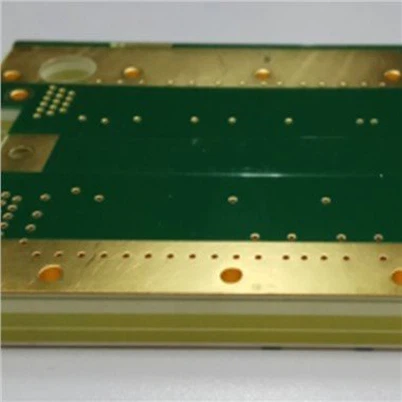


The rigid-flex board of Sihui Fuji
Leave a message
Sihui Fuji focuses on the manufacturing of small and medium batches, high difficulty, and high reliability rigid-flex pcb. In order to achieve high quality, we continuously strengthen our technological research and development, invest more resources in the development of high-level HDI rigid-flex board technology, and strive to achieve market share in our products.
Regarding the FPCB, it mainly has the following characteristics:
1.It can be assembled with 3D stereo wiring
2. It can be dynamically used with high bending requirements
3. High density circuit design, capable of achieving HDI
4. High reliability, low impedance loss, complete signal transmission
5. Shorten installation time, reduce installation costs, and facilitate operation
6. With rigid plate strength, it can support
After continuous trial and development, Sihui Fuji is now able to achieve mass production of 1-20 layers. The products cover medical, unmanned aerial vehicles, smart phones, electronic cigarette, new energy vehicle power batteries, LED lights, door locks, car sensors and other products.
We have taken the following measures to control the problems that are prone to occur during the production process, such as flexible board deformation, interlayer misalignment, flexible board plating holes, and uncovered production.

Picture:The cross-section of rigid-flex pcb
Flexible board deformation
We use a dedicated FPC horizontal line for production, and do not use mixed row splicing to ensure the flatness of the board surface.
Interlayer misalignment
1.we will change the alignment holes between layers from shooting to drilling.
2.Determine the expansion and contraction of the rigid board based on the expansion and contraction of the flexible board, ensuring the alignment accuracy of the flexible board and the rigid board.
3. Determine the expansion and contraction of the rigid board based on the expansion and contraction of the flexible board, ensuring the alignment accuracy of the flexible board and the rigid board.
4. The method of pressing multiple double-sided boards has been changed to overlaying a single double-sided board with copper foil, all using the same layer of inner layer patterns for alignment.
Solder mask deviation
Both patterns and solder mask are processed using LDI exposure, and the alignment accuracy can reach+/-25um.
Minimum capability for line width/line spacing: 35/35um
Flexible board plating hole
1. Use specialized drilling parameters for processing to ensure the thickness of the through-hole wall.
2. If there are metallized holes on the flexible board, use dedicated black hatching and VCP electroplating processing.
3. After electroplating, we will do cross-section to confirm the copper thickness inside the hole. The minimum hole copper thickness on the flexible board is ≥ 15um, and the minimum hole copper thickness on the rigid board is ≥ 21um
Depth-controlled uncovering process
1. The thickness of one side of the rigid board ≥ 0.25mm is produced using laser blind control 0.1-0.2mm+adhesive film 0.075mm+ depth-controlled uncovering with blind routering process.
2. When the thickness of one side of the rigid board is less than 0.25mm, it is made using a 0.075mm adhesive film and depth-controlled uncovering with routering process
3. When the thickness of one side of the rigid board is ≤ 0.10mm, it is produced using a 0.05mm adhesive film and depth-controlled uncovering with laser routering process.
We have obtained ISO9001, IATF16949, ISO14001, ISO13485 and other systems and UL certifications.
The 1-20 layers of rigid-flex boards have been mass-produced, and the normal delivery time for ordinary boards is around 28-45 days.
If there are special requirements for blind holes, buried holes, adhesive dispensing, reinforcement, etc. on the board, the delivery time will be appropriately extended.