
Introduction of V-cut process
Leave a message
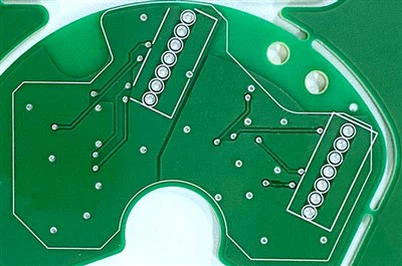
Printed circuit board is a type of circuit board that carries key components of modern electronic products. The pattern of copper foil on the board connects wires, components, and electronic components to form a complete circuit. Unlike ordinary cutting machines, the V-cut process for printed circuit boards is a high-precision microelectronic technology that can be used to manufacture various circuit boards necessary for electronic products.
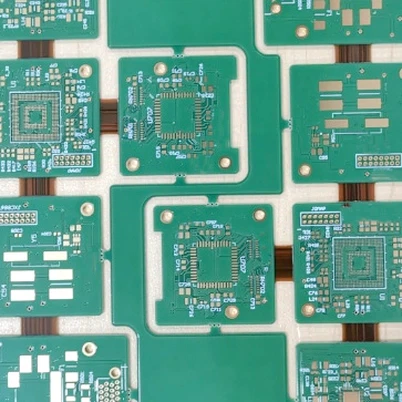
The V-cut process is a commonly used process for pcb segmentation, which involves cutting the entire board into multiple small boards using a V-shaped cutting tool. These small boards can be easily detached from the board, forming independent printed circuit boards. The V-cut process has some advantages, as it can efficiently complete various branching tasks and the entire process is also very fast. Meanwhile, the V-cut process is also a low-cost manufacturing process that can significantly reduce the cost of printed circuit boards. In addition, V-cut process can further improve the stability and reliability of PCB, unnecessary components contained in BOM (bill of materials) are eliminated, and the final product will show a low failure rate.
The V-cut process for boards also has its applicability, such as when manufacturing larger electronic products. Because larger printed circuit boards are divided into many small pieces, if only ordinary fine cutting is used, it will increase the cost and manufacturing time of the board. In contrast, V-cut, as a batch processing technology, will achieve the goal of cutting boards more efficiently.
The process for boards is one of the indispensable processes in electronic manufacturing and has been widely applied. It has improved the quality of circuit boards and will play an increasingly important role in the manufacturing of electronic products. Although its application range is limited, V-cut process is still a very practical manufacturing technology for large electronic products.
The so-called 'V-cut' is a type of dividing line that a printed circuit board (PCB) manufacturer uses a rotary cutter to cut at specific positions of the PCB according to customer drawing requirements. Its purpose is to facilitate the subsequent 'De panel' of SMT printed circuit boards after assembly. Its cut appearance looks like an English 'V' shape, hence its name. Some people call it 'micro cut', while others call it 'V-cut'
V-Cut residual thickness requirements
Generally speaking, when defining the groove size of V-Cut, we only define its residual thickness, which is the remaining board thickness between the two inverted V-ports of the V-Cut groove, because this thickness determines the severity of whether the board is prone to breakage and deformation.
The most common residual thickness of V-Cut is recommended to be 1/3 of the board thickness, but the minimum is not recommended to be less than 0.35mm. If it is thinner, there is a risk of early fracture of the board during the manufacturing process. The thickest V-Cut is not recommended to be greater than 0.8mm. If it is thicker, the V-Cut machine may not be able to cut it completely in one go, and it will also increase the degree of damage to the V-Cut machine blade and reduce its service life.
Angle requirements for V-Cut
Generally speaking, V-Cut can be defined in three angles: 30 °, 45 °, and 60 °, with the most commonly used being 45 °.
The larger the angle of the V-Cut, the more boards the edges of the board are cut off by the V-Cut, and the lines on the corresponding PCB must be more inward to avoid being cut by the V-Cut or being damaged during the cutting of the V-Cut.
The smaller the angle of V-Cut, the theoretically more favorable the spatial design of PCB, but it is not conducive to the lifespan of V-Cut blades in PCB factories. Because the smaller the V-Cut angle, the thinner the blade of the electric saw, and the easier it is to wear and break its blades. In addition, the thicker the board, the greater the angle of the V-Cut, as it must be cut deeper.