

Factors affecting the roughness of the hole wall
Leave a message
The roughness of printed circuit board hole wall refers to the unevenness of the hole wall surface, which has a significant impact on the quality and signal transmission of PCB circuit boards. The factors affecting the hole wall roughness of circuit board mainly include the following aspects.
Firstly, the properties of the pore wall material are important factors affecting the roughness of the pore wall. The commonly used circuit board materials currently include FR-4 (glass fiber reinforced epoxy resin board), aluminum substrate, ceramic board, etc. The characteristics of different materials are different, therefore the roughness of their pore walls is also different. For example, the hole wall roughness of FR-4 board is relatively high, while the hole wall roughness of ceramic board is relatively low.
Secondly, the size and shape of the hole also affect the roughness of the hole wall. The diameter, depth, and shape of a hole can affect the cleanliness and smoothness of the hole wall. Generally speaking, the smaller the diameter of the hole, the harder it is to clean the hole wall, resulting in an increase in the roughness of the hole wall. In addition, different shapes of holes can also have an impact on roughness. For example, circular holes are relatively easy to machine and have lower wall roughness, while elliptical or other irregularly shaped holes are relatively difficult to machine and have higher wall roughness.

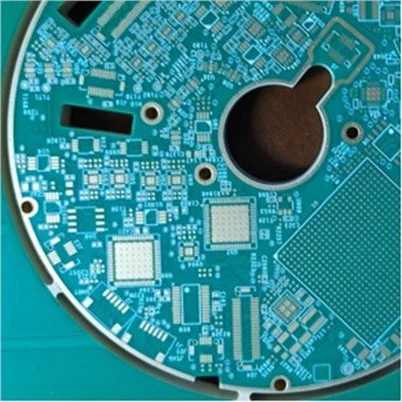
Picture:For parts mounting hole
In addition, the processing method of the hole wall can also have an impact on the roughness of the hole wall. The processing methods include mechanical drilling, laser drilling, etc. Mechanical drilling is a traditional hole processing method, where the drill bit generates certain vibrations and torsional forces during drilling, which can easily lead to burrs and deformation of the hole wall. Laser drilling is relatively accurate and can control the roughness of the hole wall. In some situations where high precision is required, laser processing is usually used.
The roughness of circuit board hole walls is influenced by various factors and needs to be comprehensively considered in the actual production process. When selecting circuit board materials, it is necessary to determine the most suitable material based on actual technical requirements. In hole design and processing, it is necessary to consider the size, shape, and processing method of the hole to minimize the roughness of the hole wall and improve the performance and reliability of the circuit board.

Picture:45 degree cross section can find out such defect