

About resin plugged process
Leave a message
In recent years, the resin plugged process has been increasingly widely used in the PCB industry, especially in products with high layers and larger board thickness, which are highly favored. The resin plugged process for printed circuit boards is a commonly used technique to prevent short circuits between metal layers in printed circuit boards. The purpose is to fill holes and plug them during the manufacturing process of printed circuit boards to prevent short circuits.
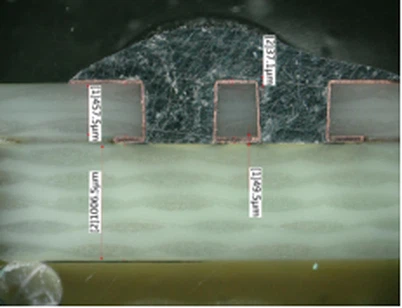
What is the resin plugged process in PCB processing? In the processing of high and multi-layer printed circuit boards, it is usually necessary to bury holes. Resin plugged holes are simply made by coating the hole wall with copper, filling the through holes with epoxy resin, and then coating the surface with copper. The surface of printed circuit boards using resin plugged technology has no dents, and the holes can be conductive without affecting welding.
In the manufacturing process of printed circuit boards, the function of the circuit is achieved by laying wires on the substrate to allow current to flow. Due to the many small holes and protrusions on the printed circuit board, if electroplating is required, these holes and protrusions will have a significant impact on the quality of electroplating, so resin plugged hole technology needs to be used.
The difference between solder plugged and resin plugged
Solder plugged and resin plugged are two different processes, and their differences are mainly manifested in the following aspects.
1.Different processes
The solder plugged is a green coating added to the elliptical opening of the solder pad to prevent the solder from wrapping in. Resin plugged holes are drilled on the board, and a thermoplastic resin is injected into the drilled hole to fill the hole and protect the printed circuit board.
2.Different functions
The two processes are similar, preventing a decrease in electronic performance. But the solder plugged hole mainly plays a role in preventing the solder pad on the board from being filled with solder, causing short circuits in the electrons in the printed circuit board. The resin plugged hole mainly serves as insulation protection.
After solidification, the solder plugged process will shrink, which is prone to air blowing inside the hole and cannot meet the high fullness requirements of users. The resin plugged process uses resin to plug the buried holes of the inner layer HDI before pressing, solving the drawbacks caused by solder plugged, and balancing the contradiction between the thickness control of the pressed medium layer and the design of the inner layer buried hole filling glue. Although the resin plugged process is relatively complex and costly in terms of process, it has advantages over solder plugged in terms of fullness and quality.
The advantage of the printed circuit board resin plugged process is that it can enhance the mechanical strength and electrical performance of the printed circuit board. By filling irregular holes and gaps, this process can prevent conductive coatings from entering these gaps and causing adverse reactions. The use of this process can also make the surface of the printed circuit board smoother and improve mechanical stability, thereby increasing the lifespan of the printed circuit board.